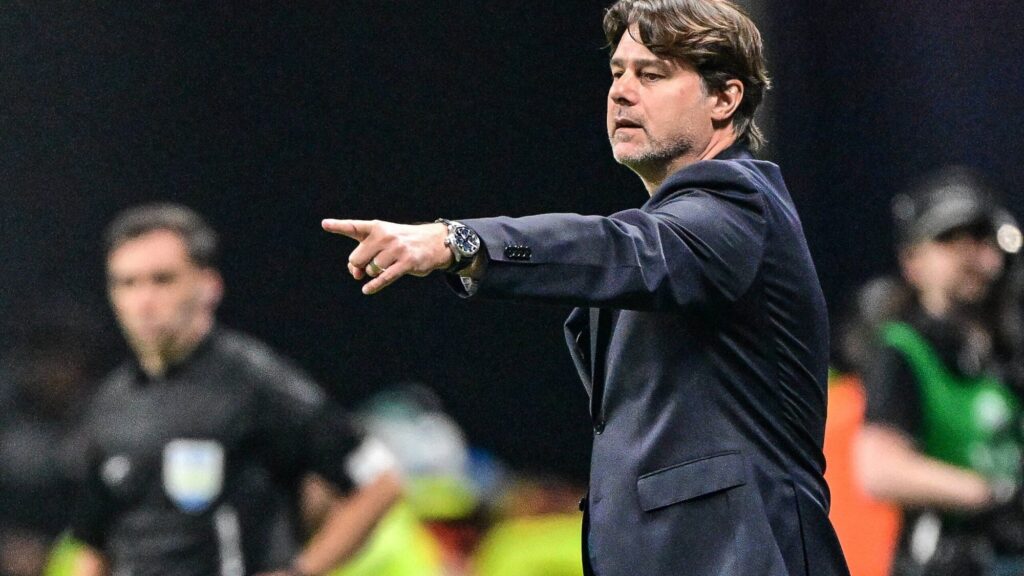

Mauricio Pochettino has given his clearest reaction yet to Manchester City’s guilty verdict, and it lands hard with Tottenham supporters who remember his years at the club. The Mauricio Pochettino Man City verdict reaction, delivered to the Guardian, cuts straight to how football’s financial rules were actually applied across the Premier League.
A commission found City guilty of violating the vast majority of 115 charges relating to financial breaches between 2009 and 2018. For a manager who spent years working under strict spending limits himself, the ruling has reopened old frustrations rather than settled them.
Pochettino did not hold back. He said football fans had “lived through a period of deception” during the years City are now found to have broken the rules. His comments carry a certain frustration, given his own managerial record at Southampton, Tottenham and Chelsea, three clubs that competed against City while working under far tighter financial constraints.
The Argentine’s frustration is not new, but the latest findings by the commision has given him fresh cause to ask why enforcement felt so uneven at the time. What follows revisits Tottenham’s toughest financial period and sets it directly against City’s now-confirmed breaches.
Pochettino Questions Financial Controls After City Verdict
Pochettino’s central question is a simple one: where were the checks while other clubs spent freely? He put it to the Guardian without softening the point, and his tone made clear this is a subject he has thought about for years, not a reaction formed after the latest findings.
His argument is not that City alone should carry the blame. Instead, he wants to know why some clubs were held to a strict standard while others, in his view, were allowed far more room to manoeuvre. That contrast, he suggests, shaped entire seasons for clubs like his own.
The strong argument comes from the Argentine who took two unfashionable projects, Southampton and Tottenham, to the edge of major honours. Pochettino believes that achievement should be read alongside the financial reality he was working within at the time.
Pochettino Recalls Tottenham Transfer Drought Under Strict Rules
Pochettino’s frustration centres on a specific stretch of his Tottenham career. He spent almost eighteen months without a single transfer, while the club built the new Tottenham Hotspur Stadium. He has spoken before about Spurs’ financial caution during that rebuilding project, a theme covered in our piece on Pochettino’s views on Spurs spending.
Speaking to the Guardian, he set out the details plainly and contrasted them with City’s now-confirmed conduct.
“Where were the controls? That’s what gets my attention. Where were the controls? If I remember being at Southampton, then Tottenham – I remember building [the Tottenham Hotspur Stadium] and not having the economic possibility of a transfer for 18 months. I think we were the only team in the history of the Premier League with 18 months without [making a transfer].”
“If a team like us, Tottenham, was fighting for titles with those above us and every year in the top four, getting to the semi-finals of Champions League without being able to do a transfer for 18 months, all because we needed to get used to the [Premier League financial controls]? They were so strict with us but also so lenient with others. Because of that, that’s why I say: it’s all very strange.”
That eighteen-month gap remains unusual in Premier League history for a club competing at the top end of the table. Pochettino took Tottenham to a Champions League final and repeated top-four finishes without the transfer activity his closest rivals enjoyed at the same time.
His point is not that Spurs should have spent more recklessly. It is that the rules he operated under seem to have been applied unevenly across the league. His time at Southampton, from 2013 to 2014, followed a similar pattern of tight budgets while other clubs expanded spending with far less scrutiny. His later spell at Chelsea in the 2023-24 season gave him another close look at how differently resourced clubs approached the same competitions.
De Zerbi Framework and Opposition Management Perspectives
De Zerbi now leads a Tottenham side still judged against standards set in a different era, including the Champions League final run Pochettino reached. That history feeds a long-running debate among supporters over the 2016-17 title race, a subject we examined in the 2016-17 title debate. Financial restrictions from that period still shape how the club’s recent history is discussed today.
Supporters have also speculated openly about whether Pochettino could one day return to the club, a subject explored in Pochettino on a potential return. Those conversations sit alongside the current reality facing De Zerbi. He operates in a league where financial scrutiny has only intensified since Pochettino’s departure, built on the same principles that once left Spurs unable to sign a single player for a year and a half.
Whatever De Zerbi’s own view on the City verdict, the episode is a reminder that managing opposition now stretches beyond fixtures and injuries. Pochettino’s comments effectively ask whether financial oversight was ever fairly distributed among the clubs it was meant to govern.
The timeline for Man City’s mischief
Manchester City’s case stretches back further than this week’s verdict. UEFA banned the club from European competition in 2020 and fined them €30m, before the Court of Arbitration for Sport overturned that ban on appeal. The Premier League’s own investigation, running in parallel for years, examined 115 charges covering financial rule breaches between 2009 and 2018.
This week’s reported commission findings found City guilty of violating the vast majority of those charges, nearing an end to one of English football’s longest-running disciplinary cases. The Mauricio Pochettino Man City verdict debate now shifts to what happens next, though Pochettino himself was careful not to predict a specific outcome.
“Whatever punishment [they choose], it’s impossible to turn back time. It’s done a lot of damage, more than anything the guidelines. At the end of the day many clubs followed the rules and some didn’t. Maybe they thought that the punishment [wouldn’t come for a lot of years] – what are they going to do? An economic punishment? Docking points? It’s really hard.”
His comments stop short of demanding a particular punishment. Instead, they make a broader point as years of financial advantage cannot simply be undone once a verdict finally arrives.
For Tottenham supporters who remember the stadium-build years and the transfer freeze that came with them, Pochettino’s comments on the verdict give voice to a frustration many felt long before this week’s ruling.






Comments.
Loading comments…