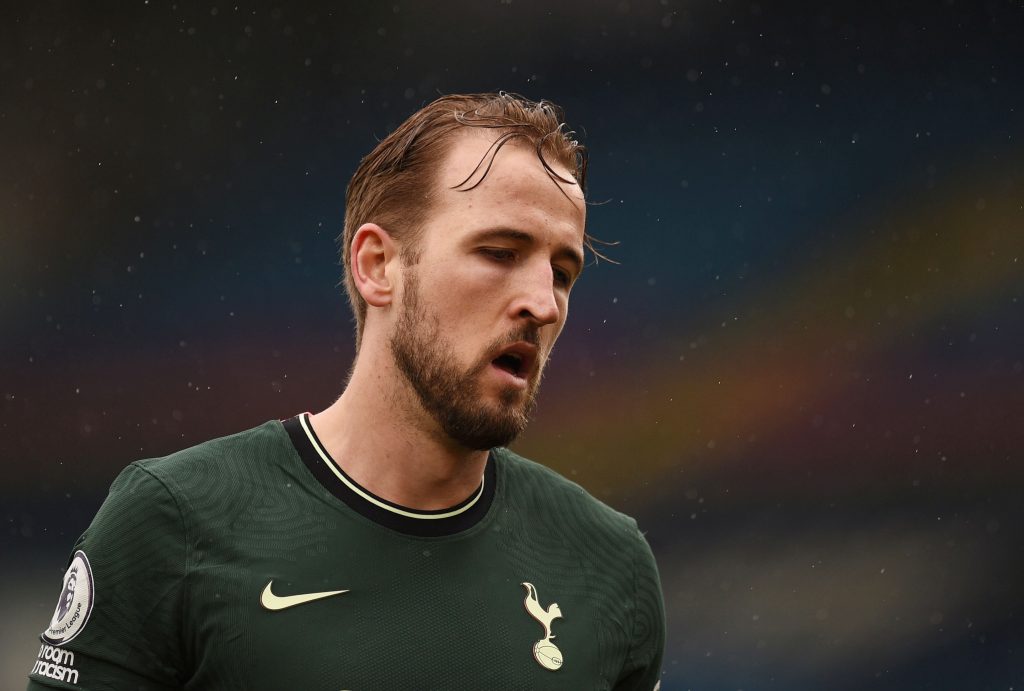
Harry Kane has made a career of turning Tottenham nostalgia into uncomfortable evidence. Every fresh England milestone now lands in north London with the same blunt question attached: how close are Spurs to replacing the certainty he once gave them?
That question sharpened again after Kane’s latest World Cup moment. talkSPORT reported that the former Tottenham striker moved to 82 England goals after scoring against Panama, with Andros Townsend arguing that Kane’s longevity makes him England’s greatest player. The same outlet has him on 11 World Cup goals, now clear of Gary Lineker as England’s record scorer at the tournament.
For Roberto De Zerbi, this is not just a sentimental subplot. It is a live recruitment warning. Spurs can change the system, quicken the press, and add more vertical runners, but elite attacks still need one player who punishes the half-chance.
Kane’s Numbers Expose The Standard Spurs Are Chasing
The Guardian’s analysis of England’s 2026 World Cup attack showed how central Kane remains to Thomas Tuchel’s side. Kane has scored 13 goals in Tuchel’s 17 England matches, while no other player has more than three, and Jude Bellingham’s improved connection with him against Panama finally gave England a cleaner route through a compact block.
That is the part Tottenham should study most closely. Kane is not simply finishing service. He is still acting as the reference point around which elite creators calibrate their timing, weight of pass and final-third decisions.
Spurs have spent much of the post-Kane era searching for ways to spread attacking responsibility. That can work over a league season, but it is harder to trust when matches get tight. Kane remains the reminder that volume is not the same as inevitability.
That distinction matters because De Zerbi’s sides can create long spells of territorial pressure without always producing a clean central finish. Tottenham can improve the supply line through better full-back positions, sharper midfield rotations and more aggressive counter-pressing, but the attack still needs a fixed threat who bends the opposition centre-backs inward.
Why De Zerbi Cannot Leave The Role Undefined
De Zerbi’s Tottenham rebuild has already been framed around structure. Sky Sports reported last week that Spurs could target up to eight signings as the head coach reshapes the squad, with midfield control and squad churn high on the agenda.
Yet the No 9 decision has to sit near the top of that list. A De Zerbi forward can drift, combine and press, but the job cannot become so fluid that Tottenham lose the one thing Kane still delivers for England: cold, repeatable penalty-box authority.
There is also a pre-season pressure point. Tottenham’s own fixture release confirmed that De Zerbi’s first full campaign opens away at Brentford on Saturday 22 August, while the club’s World Cup tracker shows several Spurs players still involved in knockout football. That compresses tactical work before a season in which the head coach will need clarity quickly.
The Legacy Is Now A Recruitment Brief
Kane’s latest run should not drag Tottenham into another cycle of regret. The club has already lived that argument. The smarter reading is harsher and more useful: this is the profile benchmark.
Spurs do not need a replica. They do need a forward who can make creative players braver because the first pass into the box feels worth attempting. They need a striker who turns sterile possession into scoreboard pressure and gives De Zerbi’s positional play an end point.
That is why Kane’s World Cup form matters to Tottenham even from a distance. It strips the discussion back to a simple recruitment truth. Systems can raise the floor, but elite centre-forwards still decide how high the ceiling goes.
Read more: Harry Kane and Gareth Bale prove they are Tottenham through and through.






Comments.
Loading comments…