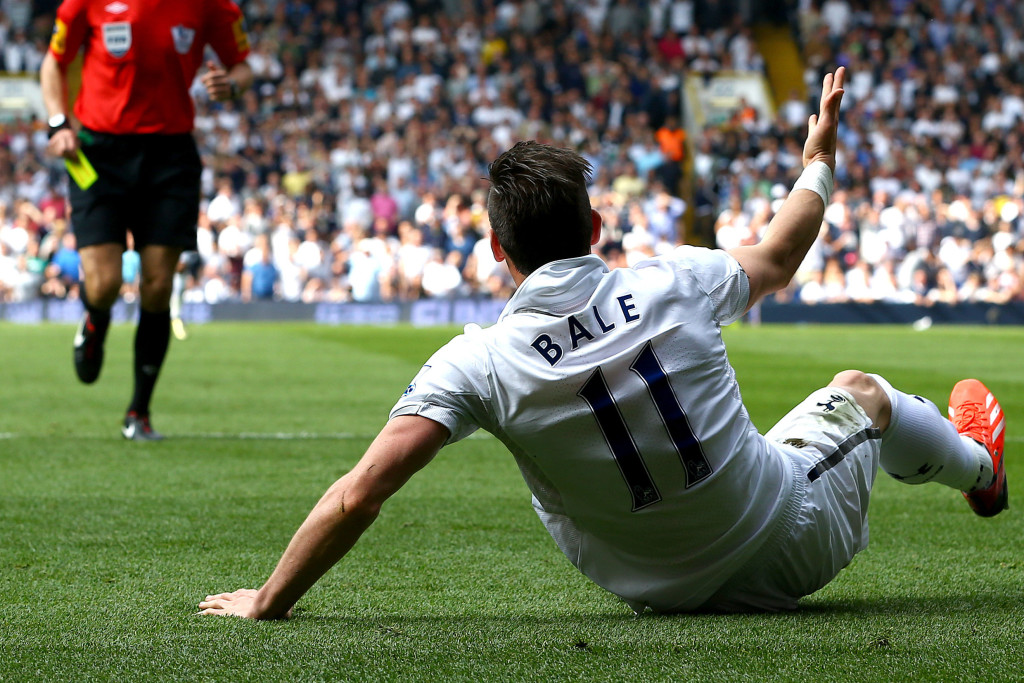

When Wales secured qualification to Euro 2016 earlier this month, the media’s attention was focused on one player who had led his national side to their first major championships since 1958, his name is Gareth Bale.
It’s been two years since Bale left North London to join arguably the world’s biggest football club, Real Madrid. On the 1st of September 2013, Real Madrid parted with over £80 million in order to secure the incredibly talented Welsh winger.
His time in the Spanish capital has been eventful, scoring a magnificent goal in the 2014 Copa Del Rey final to beat their arch-rivals Barcelona, never mind scoring the goal that put them ahead in the 2014 Champions League final against their city rivals Atletico in a game that brought the long awaited La Decima to the Bernabeu.
However, last season saw the demanding fans at the Bernabeu turned on him as his formed dipped and Madrid missed out on all three major honours to their biggest rivals, Barcelona.
It has been a remarkable rise for the ex-Southampton left-back who Tottenham acquired in 2007 to the Champions League winning transfer record-breaking Real Madrid and Wales forward.
It’s often forgot how difficult Bale found it to adapt to Tottenham early in his career, as the young prospect who had tore up League One for Southampton struggled to get to grips with the physicality and demanding nature of the league.
He also wasn’t helped the rate of manager and player turnover during his early years at Spurs, he had barely put his foot through the door at White Hart Lane and Martin Jol was on his way out of North London. Juande Ramos was brought into replace the Dutchman and Bale started well however, an unfortunate collision with Birmingham’s Fabrice Muamba left Bale with ankle ligament damage and surgery would mean that he would miss the rest of the season.
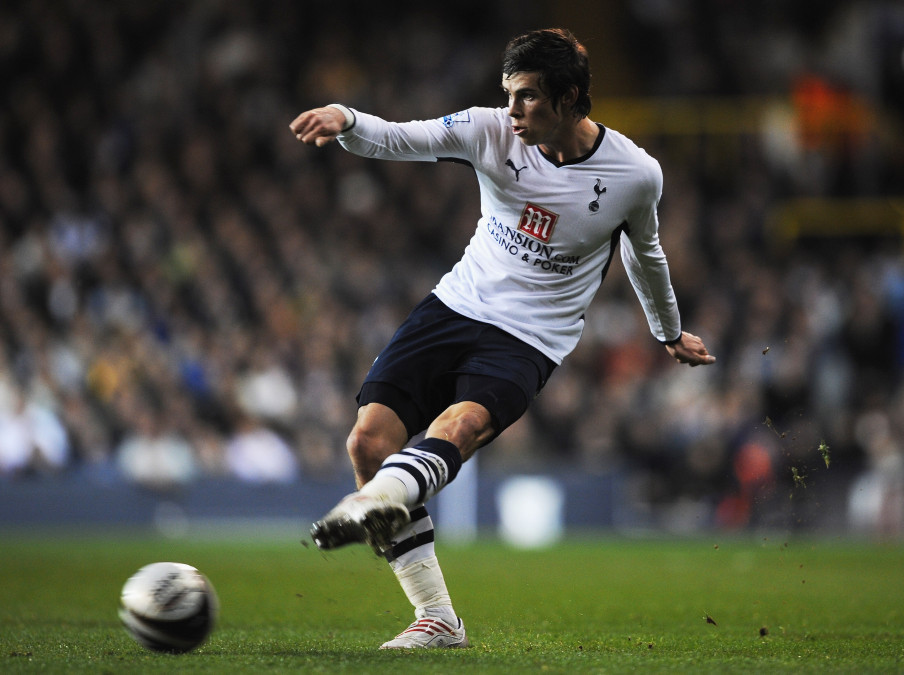
A return during the 2008-09 season was short lived, as Juande Ramos was replaced by Harry Redknapp after a shocking start to the season, whilst Benoit Assou-Ekotto replaced Bale at left-back after he struggled during the start to the season. There was also an unfortunate stat for Bale during his initial start to life in North London, during his first 24 League games for Spurs he had never been on the winning side.
The 2009-2010 season saw Bale’s and Tottenham’s fortunes begin to change, Bale began to find form, whilst Spurs memorably qualified for the Champions League for the first time. He tasted his first win in a Tottenham shirt in the League, after coming as a late substitute during a 5-0 victory over Burnley. An injury to Assou-Ekotto also led to an opening at left back and Bale took his chance, impressing then manager Harry Redknapp to such an extent, he kept out Assou-Ekotto on his return from injury.
The 2010-2011 season would be the time when Bale introduced himself to the world stage as a potential superstar of the future. Spurs were in the Champions League for the first time and playing an away game to then reigning European champions Inter Milan in the San Siro. However, Spurs found themselves 4-0 down at half-time and their finest night was turning into their worst. Gareth Bale however had other ideas, although he could not quite turn it around himself, his second-half hat-trick showed everyone he was a totally different player to that of three years before.
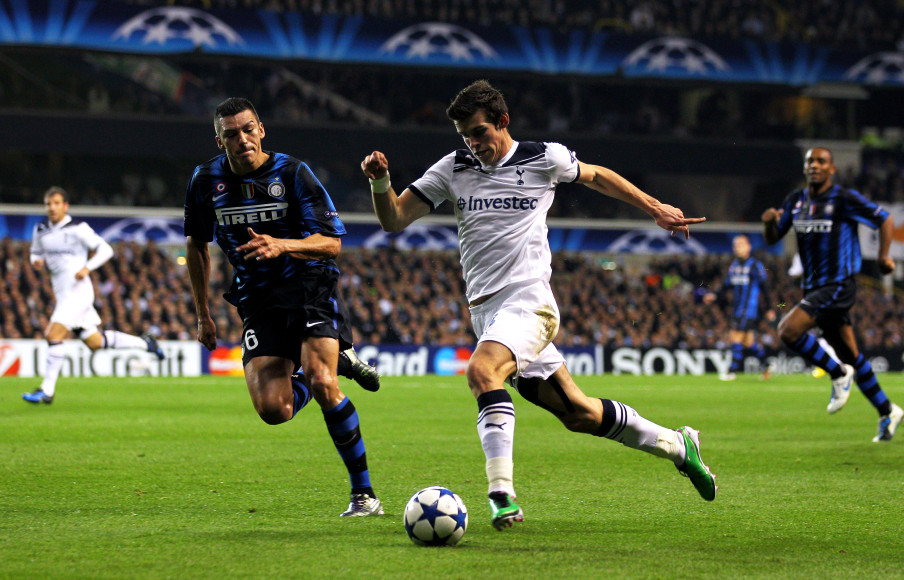
The return game at White Hart Lane was also as memorable, as Spurs downed Inter Milan 3-1 with Bale memorably tormenting Brazilian right-back Maicon as he ran the show for Tottenham. It was also the first time Bale had scored more than 10 goals for Spurs in a season as he scored 11 goals in 41 appearances and was awarded the PFA player of the year award for his performers.
The 2011-2012 was when Bale added the consistency to his game, an attribute that makes a player truly great. Playing on the left of a 5 man midfield, which included Scott Parker, Rafael Van Der Vaart, Luka Modric and Aaron Lennon he was a part of the Spurs team which surged into a 10 point lead over Arsenal as the season progressed. However, the teams formed collapsed after being beat by Arsenal and although Spurs finished 4th, it wasn’t enough to secure Champions League qualification as Chelsea won the Champions League. Bale was rewarded as one of the best players in Europe in 2011, as he was named in Uefa’s team of the year on the 5th January 2012.
With Redknapp dismissed by Levy after failing to secure Champions League football, Andre Villas-Boas was appointed and he set about making Bale his main man. With Luka Modric and Van Der Vaart leaving Spurs, Villas-Boas moved Bale in the no.10 role and even as a lone forward on occasion and Bale improved even more. As the season ended and Spurs missed out on Champions League qualification again by a point, Bale’s performances had captured the eye of Real Madrid and Florentino Perez. His 26 goals in 44 appearances had also seen him scoop the PFA players of the year and Young player of the year awards as British football marveled at his magnificence.
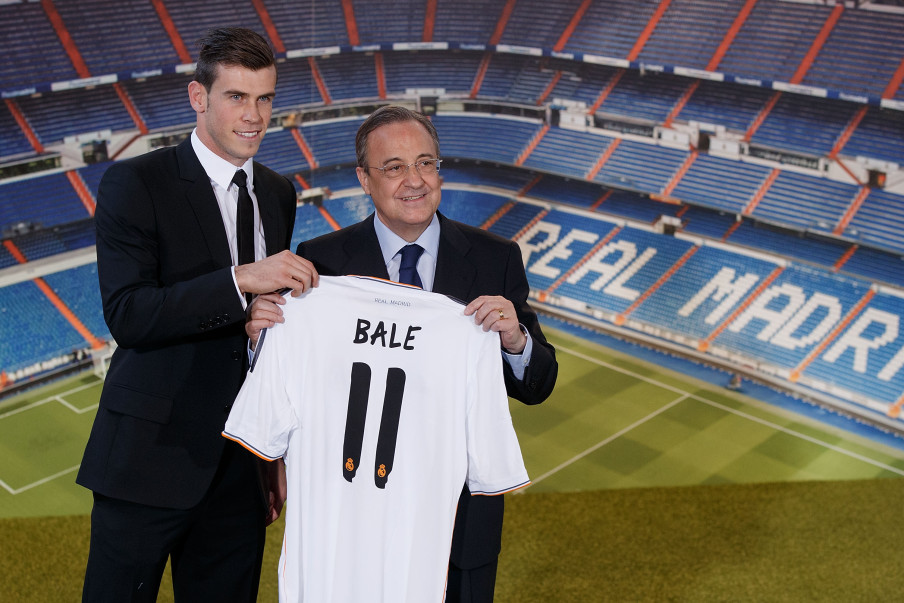
With Real Madrid circling, Spurs pre-empted Bale’s departure with a raft of new signings with the money they expected to receive from Bale’s transfer to Spain. With Bale not playing for Spurs in the early part of the 2013-14 campaign, he finally joined Madrid for a record-breaking £85.3 million on the 1st of September 2013.

Comments.
Loading comments…