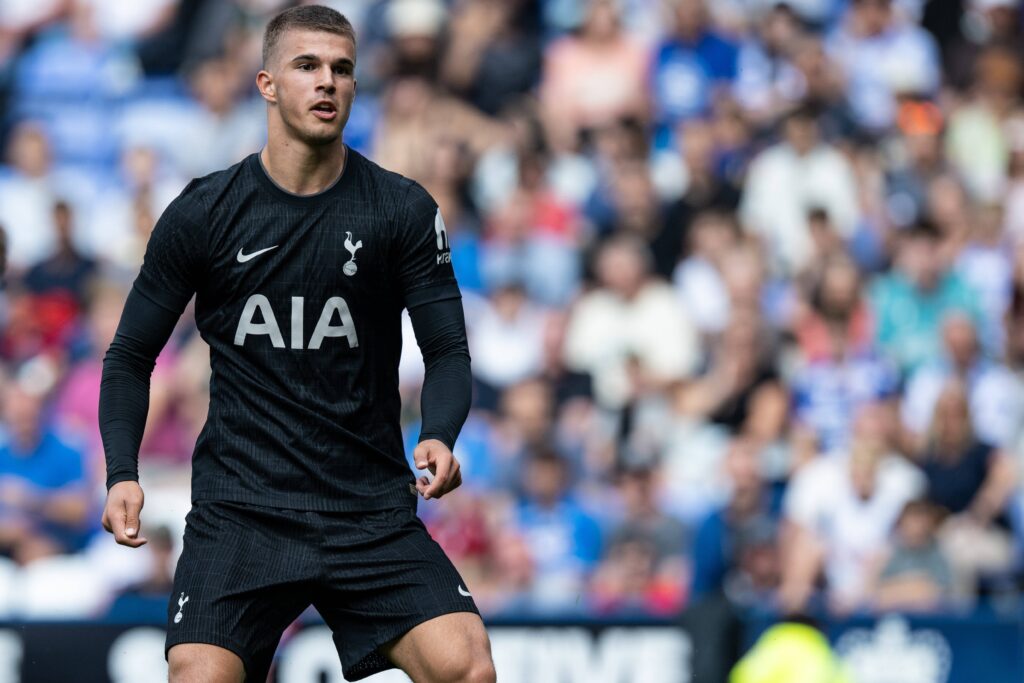
Luka Vuskovic’s Tottenham future does not depend on whether he starts for Croatia against Portugal, but the World Cup knockout tie can still give Roberto De Zerbi a useful defensive clue.
The 19-year-old centre-back remains one of Spurs’ most important long-term defensive assets, and his role in Croatia’s last-32 meeting with Portugal should interest Tottenham supporters even if he begins on the bench.
Tottenham confirmed that Croatia face Portugal in Toronto in the early hours of Friday, 3 July, with Vuskovic having started the opening 4-2 defeat to England before staying unused in the wins over Panama and Ghana. That is not failure. For a teenager inside a veteran Croatia squad, it is live education.
The pressure point for Tottenham is different. De Zerbi has already added senior defensive pieces, while Jan Paul van Hecke and Micky van de Ven have shaped the recent World Cup discussion around his back line.
Vuskovic is the longer play, but Portugal can still give Spurs a valuable answer.
Croatia Vs Portugal Can Give Tottenham Vuskovic Evidence
Croatia’s route into the last 32 has been awkward enough to make the Portugal tie useful from a Tottenham perspective. Reuters reported that Croatia beat Ghana 2-1 to secure second place in Group L, with Nikola Vlasic heading the winner from Luka Modric’s corner after Ghana had equalised through Derrick Luckassen.
That matters because Croatia did not drift through on reputation. They had to manage tension, late momentum swings and the emotional pull of Modric’s likely final World Cup.
Vuskovic watching that from the bench still exposes him to a standard Tottenham cannot recreate in pre-season friendlies. De Zerbi’s system asks centre-backs to defend space, carry possession into pressure and stay calm when games become stretched.
Vuskovic’s Hamburg loan gave him senior rhythm, but tournament football tests decision-making differently. The next step is not simply whether he can win headers.
It is whether he can process elite forwards, sudden transitions and crowd pressure without becoming reckless.
That distinction should influence Tottenham’s summer planning. A player can be too raw for automatic Premier League starts and still too valuable to be treated as expendable.
Tottenham Should Resist A Simple Vuskovic Sale Narrative
The temptation with Vuskovic is to turn every bench role into a transfer-market argument. Tottenham have already had to deal with interest around the defender, but this summer should be about clarity rather than panic.
That is where the wider defensive picture matters. Van Hecke’s World Cup goal gave De Zerbi early Tottenham evidence, while Van de Ven remains one of the squad’s most valuable recovery defenders.
Vuskovic sits in a different category. He is not just another centre-back fighting for minutes; he is a premium development asset with a rare physical and technical profile.
The Bundesliga’s tournament profile on Vuskovic framed him as one of the competition’s young defensive names to watch after his Hamburg season, noting his scoring threat and senior Croatia progress. That profile is exactly why Spurs need to be careful.
A 19-year-old centre-back with aerial power, passing range and senior international exposure is not a normal squad asset. He is either a future starter, a strategic loan decision, or a premium sale.
Treating him as loose collateral would be lazy squad building.
De Zerbi Needs A Tottenham Pathway For Vuskovic
The Portugal fixture can sharpen Tottenham’s thinking even if Vuskovic starts on the bench again. If Zlatko Dalic turns to him against elite attacking pressure, Spurs get a direct stress test.
If he remains unused, De Zerbi still gets a player returning from a month around Croatia’s biggest football personalities. That means a knockout camp, a high-pressure environment and daily work alongside Modric, Mateo Kovacic and Josko Gvardiol.
That is not as clean as a 90-minute scouting report. It may be more realistic.
Tottenham’s rebuild cannot be built only around immediate senior signings. De Zerbi must also decide which young players are worth protecting from the market.
Vuskovic’s World Cup has become a quiet but important part of that audit.





Comments.
Loading comments…